
-
315 people are missing
The UN has urged Iraq and Kuwait to speed up the search for 315 people, mostly Kuwaiti nationals, still missing since Iraq's 1990 invasion of Kuwait. Read more →
-

Kuwait starts demolishing 263 buildings in Jleeb Al-Shuyoukh
Kuwait Municipality has begun tearing down 263 violating properties in Jleeb Al-Shuyoukh, the first of 757 buildings targeted in a phased enforcement drive. Read more →
-
Kuwait court sentences 3 to death over plot to kill minister
A Kuwaiti court handed down death sentences to three defendants and five-year jail terms to eight others over a plot to assassinate Interior Minister Sheikh Fahad Al Yousef. Read more →
-
Kuwait minister warns firms over late salaries to expats
Kuwait's Interior Minister Shaikh Fahad Al Yousef has told business owners to pay all employees on time, warning that some firms delay wages for expatriate staff while prioritising Kuwaiti employees. Read more →
-
Indian expat held in Kuwait over maid-hiring fraud scam
Al Faiha Investigations officers arrested an Indian expatriate wanted in several fraud cases over promises of cheap domestic workers who never arrived. Read more →
-

Kuwait sets KD 200 fee to appeal medical liability
Kuwait's Ministry of Health has set new fees for the Medical Liability Authority – KD 20 for administrative requests and KD 200 to form an appeals committee – starting 1 November 2026. Read more →
-
US Orders Non-Emergency Staff to Leave Saudi Arabia
The US has ordered non-emergency government staff and their families out of Saudi Arabia, as Houthi threats continue and Riyadh's King Khalid Airport only partly reopens. Read more →
-

Trump: Iran strike possible ‘tomorrow’, deal still open
Donald Trump says the US could hit Iran as soon as tomorrow, or instead reach a 'big, beautiful' deal, as uncertainty over the unresolved war continues. Read more →
-

Transfer your money in seconds
Kuwait's remittance market hit $16.7 billion in 2025, and most of that money now moves through phone apps instead of exchange house branches. Read more →
-
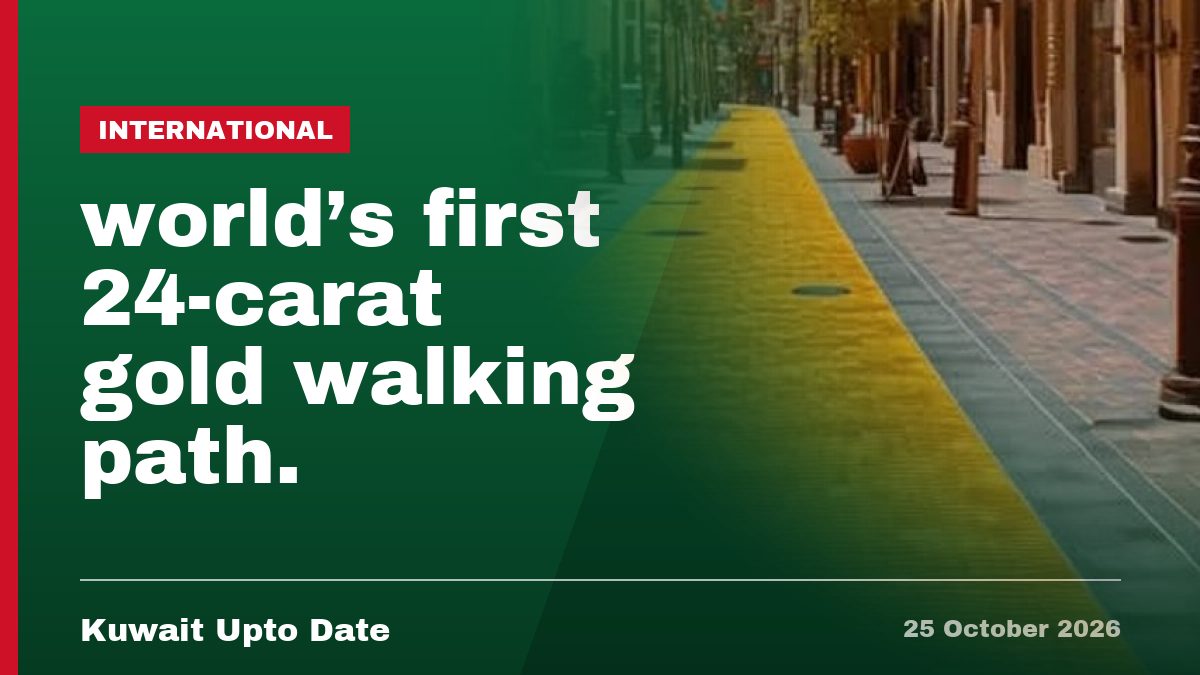
world’s first 24-carat gold walking path.
Dubai Gold District plans to open the world's first 24-carat gold walkway before the end of 2026, alongside a record-breaking pair of gold earrings and fast-growing gold trading business. Read more →

Kuwait Upto Date appFree · instant Kuwait news alerts